
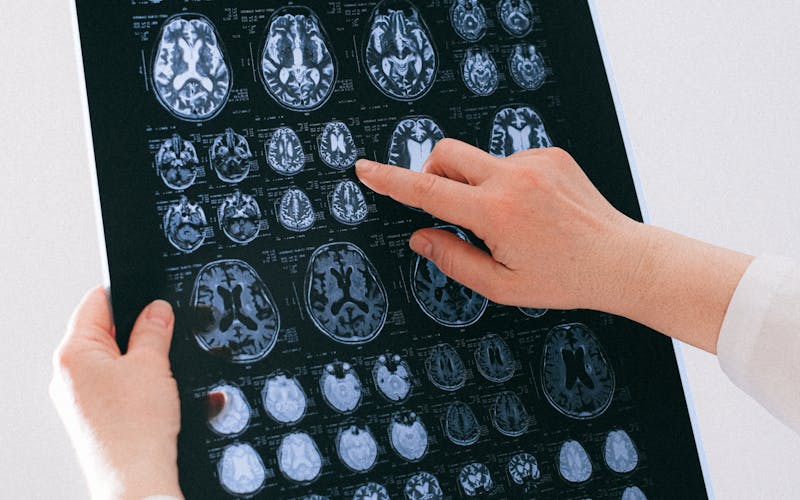
Is the child not learning and frequently disrupting the class? That still doesn’t mean they have an attention disorder. Even if it was recommended to give them Ritalin, it may be a wrong diagnosis.
How can you identify the real problem before you give them medication? Here are a few ways
Yifa Shir-Raz
Tova and Dani, the parents of Eran (a pseudonym), aged 9, were desperate. After being summoned for the umpteenth time to the counselor and the school principal only to hear that their child had again disrupted the class, that he couldn’t sit quietly for a single minute, and that he wasn’t learning anything, they realized the matter was serious. The counselor recommended they see a neurologist to find out whether his disruptions and restlessness in class stemmed from an attention disorder.
Eran underwent a diagnostic process, at the end of which the specialist determined that the child indeed suffered from ADHD (Attention Deficit Hyperactivity Disorder). The neurologist recommended treatment with Ritalin.
The medication indeed worked wonders. The teachers reported a significant improvement in behavior and studies. But Ritalin also had side effects: Eran suffered from headaches, nausea and abdominal pain. He lost his appetite, and over half a year he lost five kilos of his weight. Every morning his parents debated whether to continue giving him the medication.
By chance, the father told one of his friends, a pediatrician by profession, about the dilemma. The friend asked about the child’s sleep, and the father admitted that since he was little his sleep had not been good. He snores, sleeps with his mouth open and wakes up a lot at night.
Following the friend’s recommendation, Eran came for an examination at a sleep laboratory. It was found that he suffers from sleep apnea due to enlarged tonsils that create a blockage in the airway and disturb his sleep. About half a year ago Eran underwent surgery to remove the tonsils, and since then his parents report a marked improvement in his sleep. At the same time the teachers report an improvement in his behavior and achievements. He is no longer treated with Ritalin.
Eran is not the only case misdiagnosed as suffering from attention deficit disorders. Although there are no data on the subject, last October the UN Committee on the Rights of the Child issued a severe warning against erroneous psychiatric diagnoses of attention deficit disorders among children, and consequently, the over-prescription of medications to treat ADHD. This warning joined the directive recently issued by the FDA to change the packaging of ADHD medications and to note on them that they may cause “psychiatric events” including “hallucinations, suicidal thoughts, psychotic behavior and violent and hostile behavior.” The organization also recommended adding a warning against the dangers of sudden death and cardiac disturbances, following 25 cases of sudden death of Americans who took these medications.
2% of children in Israel up to age 18 are diagnosed each year as suffering from attention deficit disorders, and according to international data the disorder appears in 5%-8% of children at these ages. According to the estimate of the pharmacy department of the Ministry of Health, in 2002, 2 million Ritalin pills were sold to about 35,000 children.
Supporters of the medication bring evidence of its effectiveness, but its opponents claim that doctors are too quick on the trigger of the medication, and that in quite a few cases it is given following a wrong diagnosis.
So what do you do when the doctor / teacher / counselor informs you that all options are exhausted and that Ritalin is the only choice? To take it? Not to take it? Instead of engaging in the eternal debate for and against the medication, we decided to give you tools to check what your child is really suffering from, in order to prevent a wrong diagnosis.
Does he sleep well?
Does your child snore? Suffer from asthma or sinusitis and barely wake up in the morning? It turns out there is a close connection between attention deficit disorders in children and sleep disorders.
In a study conducted under the guidance of Professor Giora Pillar, director of the children’s sleep disorders unit at the sleep disorders center at Rambam, 66 boys and girls aged 12 participated, of whom 34 were children with attention deficit disorders, all of whom spent a night in the sleep laboratory. During sleep, their brain waves, eye movements, leg movements, blood oxygen saturation and carbon dioxide emission were measured, among other things. “We found that 50% of them suffer from sleep breathing disorders, such as snoring and sleep apnea, and in 10% involuntary leg movements, multiple shifts and kicks during sleep were observed – a very uncommon disorder among children,” says Prof. Pillar. “When sleep quality is not good, it is no wonder the child is tired during the day and his concentration and attention are impaired.”
And indeed, studies have shown that when healthy children are made to be sleepy during the day, they begin to develop symptoms similar to attention deficit disorder. Since Ritalin is in fact a stimulant medication that acts to raise the level of stimulating hormones such as dopamine and noradrenaline, the researchers wondered how a stimulant medication can help children who are supposedly characterized as overly alert. Does this mean that these children are in fact tired?
Prof. Pillar: “To examine the question, all the study participants also underwent a daytime sleepiness test. Each of them was given five opportunities to go to sleep during the day. Surprisingly, it was precisely the children who suffered from attention deficit disorders who fell asleep much faster than the healthy children. This means that the children who are called ‘hyperactive’ are in fact tired and sleepy children.”
In other cases, like Eran’s, attention deficit disorders may be an indirect result of a breathing disorder that causes a sleep disorder. Studies show that treating the breathing disorder may solve the attention problem.
What do you do? Ask your pediatrician for a referral to one of the sleep laboratories, which are located in various hospitals. If the child suffers from a breathing disorder, see an ear-nose-throat doctor and consult with them on how to solve the problem.
Is he anxious?
Almost every evening one teacher or another calls to complain about your child’s behavior. He disrupts, isn’t focused, but you feel that something is going on with him. Sometimes the reason is visible: the loss of a close person, or the parents’ divorce that weighs on him. But it is possible that the background to his behavior is psychiatric and he suffers from anxiety or depression unrelated to an external event.
“Attention deficit disorder develops with age,” claims Dr. Yossi Guzbansky, a specialist in child and adolescent psychiatry. “The differential diagnosis between such a disorder and another disorder must be based on developmental data, such as the course of the pregnancy, the birth, developmental milestones, the child’s character and temperament traits and his responses to the environment. In addition, it is examined how the child appears in settings where he is required to perform formal tasks, such as learning, interaction with other children, meeting defined tasks within defined time frames and more. These data and observations are of great value in determining the diagnosis.”
What do you do? See a psychiatrist or a neurologist who specializes in attention disorders. Only they will diagnose whether it is a physiological developmental attention disorder or a disorder on a psychological background.
Does he hear well?
If your child has suffered or suffers from recurrent ear infections, and/or fluid accumulation in the ears, there is a chance that his hearing is far from sharp. From there to attention deficit disorders the way is short. “Hearing

problems are the most common disability among children, and you cannot expect a child who does not hear a signal to respond to it,” says Prof. Yosef Attias, director of the audiological and neurophysiological institute at Schneider Hospital. “Since the only hearing test in childhood is done at the well-baby clinic, problems such as one-sided deafness are sometimes discovered only in the army.
“In the first stage a regular hearing test is performed, and if a deficiency is found, even a slight one, we will recommend a hearing aid for the child with attention disorders. If the hearing is found to be normal, in the second stage we will check whether the child has a hearing problem in competing noise conditions. Each of us has a special selection system that runs between the brain and the ear, whose role is to amplify certain signals – such as the teacher’s speech, for example, and to reduce others – such as the ambient noise. In some children suffering from attention disorders this system works improperly, and therefore they find it difficult to distinguish between the specific stimulus they are supposed to listen to and the ambient noise.”
The tests that diagnose this problem are called auditory attention tests. If such a deficiency is found, the treatment can range from behavioral training in which the child is taught to listen to a specific stimulus in conditions of slight ambient noise that increases during the treatment, to the use of a weak hearing aid that amplifies only the speech signal. In some cases, special systems are even used, which include a transmitter used by the teacher, allowing the child to hear them directly.”
What do you do? Ask your health fund for a referral for a hearing test. The routine tests are performed at all the hearing institutes of the health funds, while the auditory attention tests are performed at the institutes of Schneider and Ichilov hospitals.
Is he lacking iron?
A 6-year-old boy diagnosed as hyperactive was sent to the sleep laboratory at the Technion, and there it turned out that he suffers from involuntary leg movements. In a blood test conducted for him, it was found that the iron level in his blood was

close to zero (!). He was treated with an iron supplement and as a result his sleep improved and his behavior changed completely.
This is indeed an extreme example of iron deficiency, but in less severe cases the symptoms are not really pleasant: fatigue, irritability, headaches, loss of appetite and muscle pain.
“Iron deficiency has been proven to impair mental functions to the point of harming children’s IQ,” says Dr. Udi Bar, an expert in nutritional supplements. “This is the most common deficiency in the Western world, mainly among infants, children and adolescents. Many studies have shown that children suffering from iron deficiency are more prone to attention deficit disorders, and that an iron supplement for children who need it brought a significant improvement in attention and concentration tests.”
But other minerals and vitamins also take part in the celebration, including zinc, magnesium and vitamin B6. For example, in a study conducted among 611 children suffering from hyperactivity, it was found that 59% of them suffered from magnesium deficiency. Studies in which hyperactive children were given a vitamin B6 supplement demonstrated a marked improvement in the condition, which continued even after stopping taking the vitamin.
“Magnesium is essential for relaxing the muscles and the nervous system, and therefore a deficiency in it may definitely be an important factor in attention deficit disorders,” explains Dr. Bar. “Vitamin B6 is essential for the production of serotonin, an important neurotransmitter, as well as for the proper functioning of the nervous system, and a deficiency in it has been found to be linked to various neurological disorders.” In contrast, the connection between zinc deficiency and attention deficit disorders is still unclear.
What do you do? Ask the pediatrician for a referral for a blood test that will check the following values: iron, magnesium, zinc and vitamin B6. To verify what the real iron level is, you must check not only the levels of free iron in the blood (which appear in tests as IRON), but also the ferritin levels, which represent the iron stores in our body. If there is a deficiency, an iron supplement should be taken.
If a deficiency in magnesium, zinc and vitamin B6 is found, give the child a multivitamin and complete the deficiency through nutrition. You will get zinc from beef and chicken, from eggs and seafood. You will get vitamin B6 from beef and chicken, from fish, from egg yolk, from peanuts and nuts, from bananas, from avocado, from potatoes and whole wheat products. You will get magnesium from green leafy vegetables, from nuts, from lentils, from whole wheat products, from soybeans and from dark chocolate.
Is he sensitive to food?
It is possible that what your child eats adversely affects his behavior. Many studies have tried to neutralize components in food in order to find the connection between eating them and attention deficit disorders. In the early

1970s, Dr. Benjamin Feingold, an allergy expert, raised the hypothesis that various chemicals in food cause hyperactive behavior in children. In a study conducted in 1979, the electrical activity of the brain in children suffering from ADHD was examined, and it was found that certain food sensitivities affected their behavior and the electrical activity of their brain.
In the years that have passed since, interest has grown in various components that may adversely affect children suffering from the syndrome. The studies focused mainly on food coloring and preservatives, on refined sugar and on foods suspected of triggering allergies (cow’s milk, chocolate, wheat, oranges, eggs, tomatoes, peanuts, corn and soy).
According to clinical dietitian Tova Krauza, analysis of the study data shows that in some children a marked reduction in hyperactive behavior was observed when they were fed a menu free of preservatives and food coloring, and also that kindergarten-age children respond better to a diet free of these substances.
Refined sugar also doesn’t come out clean from the matter. According to American data, sugar consumption among children may reach up to 1,400 grams a week (!), and many researchers believe that it causes hyperactive behavior or worsens its intensity. However, no study has yet succeeded in proving this conclusively.
The same is true regarding the studies on foods suspected of causing allergies, although children suffering from ADHD are also more prone to suffer from allergies, asthma, abdominal pain and ear infections compared to the general population.
What do you do? It’s never too late to eat healthy. Avoid foods containing the food coloring tartrazine E201 (may be found in yellow candies, soup almonds, pastas, yellow ice pops) and the preservative sodium benzoate E112 (may be found in sweetened concentrates, soft drinks and ready-made salads).
Also reduce the amounts of sugar in your child’s food, and that means fewer sweetened drinks and fewer sweet snacks. If you are not sure whether your child is sensitive or allergic to a certain food, remove the suspect food from the menu for 2-3 weeks. If there is an improvement, return it to the menu and check whether the symptoms worsen.
What about omega-3?
In the past, mothers force-fed us fish oil, and not for nothing. Omega-3 fatty acids (called EPA and DHA), found in fish, constitute the cornerstone of the human brain tissue and fill
an important role in controlling the cell’s permeability to various nutrients important for its activity. A deficiency in them may prevent the entry of these substances and the removal of waste materials from it, and as a result cause improper functioning of the brain cells and poor communication between them. The result may be attention and concentration deficits, hyperactivity, behavioral problems and depression.
Although fatty acids are essential for the proper functioning of our body, it does not produce them itself, and therefore we must obtain them from food. DHA and EPA are found mainly in deep-sea fish (sole, herring, salmon, tuna and mackerel). The problem is that most of us consume little of them, and therefore it is very difficult to supply the body with adequate amounts of them.
However, it turns out that in healthy people the body manages to convert other essential fatty acids that come from plant sources (such as green leafy vegetables) into DHA and EPA. “Studies have found that many children suffering from attention deficit disorders have lower levels of essential fatty acids,” explains Dr. Yael Leitner, director of the center for learning disabilities at Ichilov Hospital. “It turned out that in these children there is a disturbance in the conversion of essential fatty acids from plant sources into omega-3 fatty acids. It turned out that when children suffering from attention deficit disorders are given an omega-3 supplement, there is an improvement in their condition and behavior.”
What do you do? Give the child an omega-3 supplement. As of today there is no official recommendation for the recommended dosage for children suffering from attention deficit disorders, but the dosages given in studies on the subject were 500 milligrams of DHA and 180 EPA.
The supplements for children are sold in pharmacies and health-food stores in the form of capsules, candies, syrup or spread.
The natural alternative
The search for the natural substitute for Ritalin has not stopped. Last December the results of a study conducted at Ichilov Hospital were published on a new nutritional supplement developed by the company “Enzymotec.” “The supplement is based on a unique compound of fats with biological activity, which were found to affect the structure of the membranes of brain cells and the functioning of the cells, and thereby the functioning of the brain and the abilities of attention and concentration,” explains Dr. Tzafra Cohen of “Enzymotec.”
In a study led by Dr. Nachum Vaisman, director of the clinical nutrition unit at the Tel Aviv Medical Center, about 90 children diagnosed with ADHD participated. During it the participants did not receive Ritalin or any other nutritional supplement. Half of them received the Enzymotec supplement and half received a placebo. After three months the findings showed a real improvement in their attention and concentration ability. The intention is to expand the study so that within a year the supplement will already be on the shelves.
Acupuncture and neurofeedback
Has your child already been diagnosed with ADHD and you are trying to help him not only with Ritalin? You may be encouraged to know that there are two methods that have been proven by research:
Acupuncture: It turns out that treatment with Chinese needles has an effect similar to that of Ritalin without the side effects of the medication. “The hypothesis is that in a state of some neurological disorder a ‘gate’ closes that blocks the passage of pulses from the brain to the muscles, and thereby does not allow them to be moved,” explains Dr. Roy Gonik, an expert in Chinese medicine and Chinese acupuncture. “Acupuncture treatment causes the transmission of a pulse to the brain, which in turn causes the release of substances that manage to ‘open’ the gate and thereby allow a stimulus to be transmitted again to the muscles.”
Another hypothesis that is accepted today and has been examined in many studies is that during acupuncture various chemical substances are released from the brain, including neurotransmitters, which calm the nervous system and balance it.
The acupuncture treatment should be combined with an appropriate dietary change according to Chinese medicine.
Neurofeedback: In this method, a change is made to the characteristic activity of the brain waves through biofeedback. Jason Alster, an Israeli expert in treating attention deficit disorders through biofeedback, developed a method that refines neurofeedback through a test similar to that performed on a lie-detector machine. “Attention and concentration problems also stem from a stress disorder and not only from a neurological source,” he claims. “If you manage to reduce the stress, you significantly improve attention and concentration.”
He checks the stress level through electrodes connected to the fingers, sensitive to physiological changes, such as muscle tension/sweating. “Sweat is a better source of information than brain waves (which are less stable) about the state of concentration and attention. But beyond that, the method makes it possible to influence the physical tension and breathing. When the child breathes more slowly and in an orderly manner, the brain waves also change. I also incorporate other aids in the treatment such as yoga and guided imagery.”